
Disremembering Tiananmen
There were small vigils last night in cities across Canada. Now we're expected to just move on. Not here we won't: Four essays in a Real Story Special Edition.
My National Post column this week was going to be a kind of situation report, a stock-taking, 37 years after the June 4, 1989 Tiananmen massacres that crushed a non-violent democratic uprising in China.
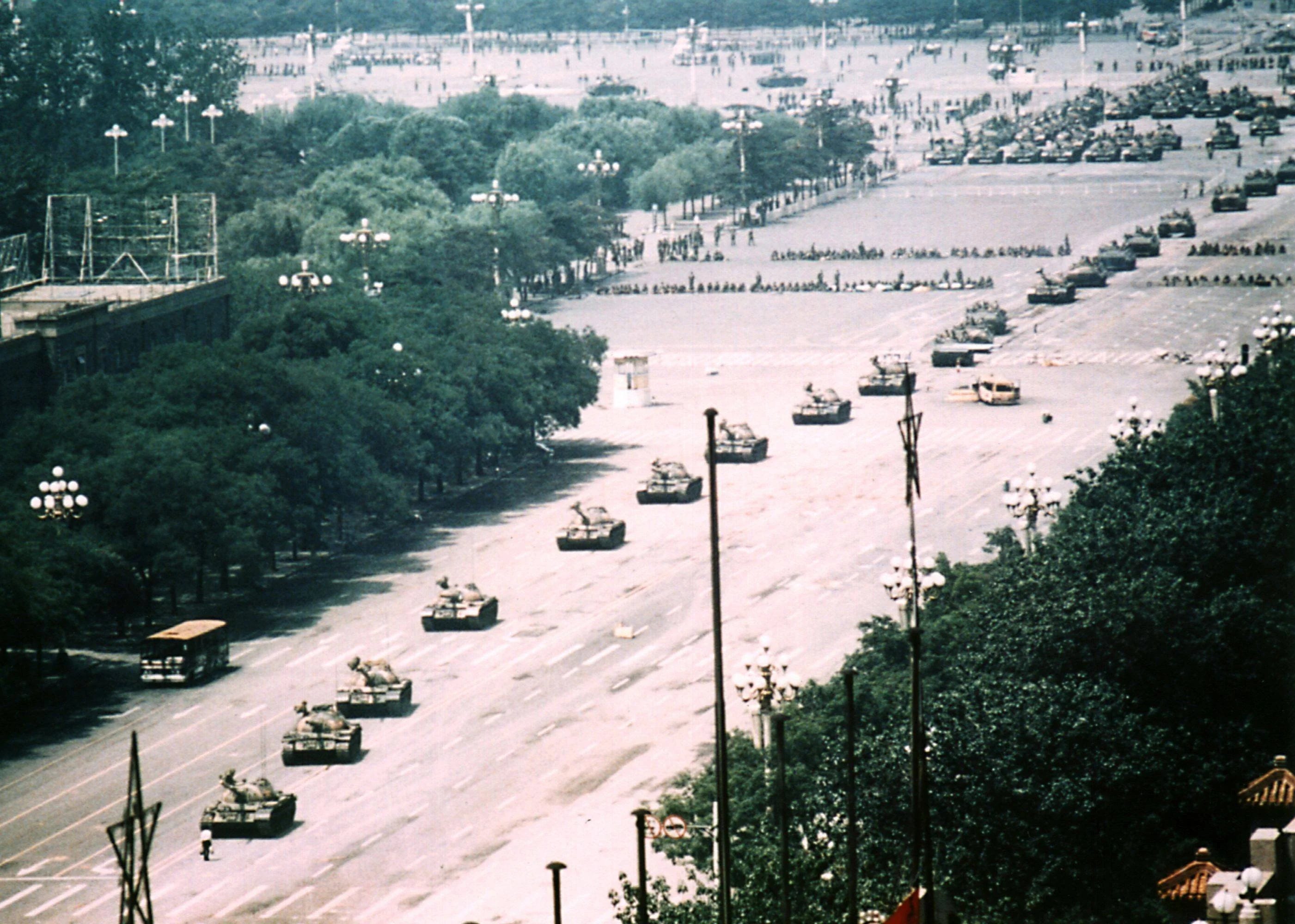
What I would have touched on:
Tiananmen was a spark. It may have failed in China, but within months of the massacres, Solidarnosc managed to win the ordinarily rigged elections in Communist Poland, and by November the Berlin Wall had fallen. The Velvet Revolution overturned the old order in Czechoslovakia. Romania’s communist regime was overthrown. Within two years, the Soviet Union no longer existed. The heroes of June 4, 1989, were an inspiration in these upheavals.
I would have pointed out that despite the vast resources of the Chinese surveillance state and a deep paranoia that prevents any remembrance, perhaps most tragically in Hong Kong, young Chinese are figuring out ways to learn about what really happened in Tiananmen Square and elsewhere across China back then.
Instead, and not unreasonably, I was assigned to cover the lastest imbecility in Ottawa: A last-minute Senate committee attempt to insert the conspiracy-theory phantasm of “residential schools denialism” into a Liberal hate crimes bill with a series of preposterous free-speech infringements that was already opposed by 40 organizations across Canada, including the Canadian Civil Liberties Association, the Canadian Conference of Catholic Bishops and the Canadian Labour Congress.
As I’ve insisted on noticing, the pretext so often cited by the China business lobby in this country that “Canadian values” would somehow rub off on China is a process that, if anything, has unfolded in reverse. I’ll be back at this, with more unreported gruesomeness, in Sunday’s newsletter.
I had hoped that the National Post could at least find space for one or more contributions marking the Tiananmen anniversary, but that didn’t work out either, despite the best efforts of my boss at the Post. This allows me to return to an important point I don’t make often enough.
No small part of the great disillusionment Canadians express about the “mainstream media” is less a matter of outrageous bias or weird ideology or the influence of state subsidies - there’s certainly sufficient evidence of that - and more about half-empty newsrooms and journalists simply being run off their feet. And editors dealing with too many developing stories to assign and plan properly. That kind of thing.
Anyway, no paywall in today’s Real Story, which contains four essays, any one of which would have featured prominently in a healthier media landscape, anywhere or everywhere across the Postmedia chain, in the Globe and Mail, or in Torstar’s various news properties. Their loss is The Real Story’s gain.
I am deeply grateful to the Canadian authors here for scrambling at the last minute to stand in for what was going to be my own contribution in the National Post. It was our hope that these perspectives would have appeared yesterday, on the anniversary.
Ivy Li is a democracy and human rights activist and contributor to The Mosaic Effect – How the Chinese Communist Party Started a Hybrid War in
America’s Backyard.
Mehmet Tohi, who fled his hometown of Kashgar to escape Beijing’s brutal repression of the Uyghur people, is the executive director of the Uyghur Rights Advocacy Project (URAP) and co-founder of the World Uyghur Congress.
Fenella Sung is a founder and Convenor of Canadian Friends of Hong Kong.
Gabriel Yiu is one of the founders and the spokesperson for the Chinese Canadians Concern Group on China Human Rights Violations, which was selected as a participant in the Hogue Inquiry into foreign interference in federal elections and democratic institutions.
Put your feet up.
Ottawa wants us to forget the Tiananmen Massacre. We won’t.
By Ivy Li
On this day 37 years ago, tanks rolled into Beijing’s Tiananmen Square, massacring civilians and demonstrators on the streets and in the square. The crackdown was nationwide, unfolding in several cities, notably Chengdu and Xi’an. The free world was shocked.
At the time, Conservative Prime Minister Brian Mulroney responded by imposing sanctions on the People’s Republic of China (PRC), but because of the powerful lobby of the Canada-China Trade Council (which later became the Canada-China Business Council,) Canadian businesses returned to the PRC within weeks.
Today, aided by rapid and massive technological advancement, the Chinese Communist Party’s surveillance and control over Chinese citizens have intensified manyfold. Its genocidal suppression of the Uyghurs, Tibetans and Southern Mongolians is well documented. Prime Minister Mark Carney ushered in his “strategic partnership” with the Chinese Communist Party in January this year, nevertheless.
Prime Minister Carney is not just pushing for more trade with the PRC. The Carney government has signed memorandums of understanding in many strategic areas, essentially offering up Canada to a holistic cooperation with the world’s largest brutal dictatorship.
The bloodstains and squashed bodies in and around Tiananmen Square might be irrelevant to Carney, his ministers and Canadian elites. But their legacy is the reality the Canadian public has to deal with. Canada’s “strategic partnership” will have huge implications for our sovereignty, national security, social stability and public safety.
Let’s start with the MOU between the RCMP and China’s Ministry of Public Security (MPS). Evidence made available during the Hogue Foreign Interference Inquiry revealed that as of August 2023, the RCMP did not envision renewing its expired MOU with the MPS “in the immediate future,” yet Carney required the RCMP enter into an MOU with the MPS for his “strategic partnership.” The RCMP has refused to release the full agreement without Beijing’s approval, despite pressure from the Conservative and NDP opposition.
What does all this mean for ordinary Canadians?
The CCP not only imposes strict control over its 100 million members and more than a billion Chinese citizens through sophisticated digital surveillance but also by interceptions and the disruption of global electronic communications. The Peoples Republic is the world’s largest
cyber hacker. Its links to international crime cartels is well-documented. Corruption in Communist China is rampant at all levels. For our RCMP to work with PRC’s MPS to “combat corruption and transnational crimes, including telecommunication and cyber fraud and illegal synthetic drugs” is
absurd. and will guarantee impunity for criminal kingpins.
The MPS is a core pillar of the CCP’s surveillance apparatus, responsible for policing, domestic intelligence gathering and population monitoring. The diaspora communities have complained for years about the lack of effective Canadian laws and enforcement tools to protect them from the overreach of the CCP. An RCMP-MPS partnership is a “doors-wide-open” offering for the regime to conveniently track dissidents and voices critical of the PRC. The MOU provides camouflage for the CCP’s transnational repression on Canadian soil.
Prime Minister Carney’s strategic partnership pushes for more “people-to-people ties,” cultural exchanges and tourism and media cooperation. This might sound benign, but China is a CCP-controlled dictatorship, not a democracy. The CCP’s United Front Work Department (UFWD) manipulates people-to-people ties and uses cultural and business exchanges to infiltrate Canada.
Our intelligence agencies and law enforcement professionals have repeatedly flagged the severe inadequacy of our existing laws to handle the UFWD. Carney urges more people-to-people ties and cultural
exchanges. Without any effective “guardrails” or a genuine effort to update Canadian laws to shield Canadians against foreign interference and infiltration, Carney’s approach amounts to normalizing UFWD operations and giving their proxies a free ride.
The majority of Canadian Chinese-language media is under UFWD’s control, forming a formidable ‘information firewall” that entraps Chinese-speaking Canadians immerses them in the CCP’s narrative and propaganda bubble. Instead of finding ways to free Chinese-Canadians from the CCP’s information captivity, Carney chooses to provide more support and convenience for PRC media to work in Canada.
This is effectively an official endorsement of CCP propaganda operations, exposing the Canadian public, especially our younger generations, to the brainwashing and psychological warfare of the CCP.
Carney’s joint statement with Xi Jinping claimed that both countries are committed to multiculturalism. Xi’s “Chinese national rejuvenation” is anything but that. Its basis is Han supremacy. The PRC’s new Ethnic Unity and Progress Law, which comes into effect July 1, mandates Mandarin as
the primary language of instruction and public use. The joint statement promotes the CCP’s narrative about multiculturalism. Carney is lending Canada’s credibility as a multicultural society to a regime that discriminates and brutally suppresses minorities.
We need to remember the Tiananmen Massacre and what the CCP really is.
Prime Minister Carney’s holistic “strategic partnership” with the PRC is not only morally wrong. It is disastrous to Canada and our diaspora communities. It will lock the Uyghur, Tibetan, Hong Konger and Chinese-
Canadian communities into the iron grip of the CCP. It will threaten Canadian sovereignty, undermine our democracy, and erode the foundation of Canadian society.
It has to be scrapped before it’s too late.
From Intimidation to Economic Coercion
By Mehmet Tohi
In 2006, the abduction of Canadian citizen Huseyin Celil should have sounded alarm bells across all democratic capitals. After being detained in Uzbekistan and forcibly transferred to China despite holding Canadian citizenship, Celil was denied Canadian consular access as Beijing refused to recognize his Canadian nationality and treated him solely as a Chinese citizen.
Celil’s case foreshadowed a troubling pattern of China’s willingness to disregard diplomatic norms, violate international legal principles, and extend its coercive reach beyond its borders. What was once viewed as an isolated incident is now widely recognized as a form of transnational repression, a term that has since entered mainstream policy and security discourse.
China’s repression now extends far beyond its borders, targeting dissidents, intimidating diaspora communities, pressuring foreign governments, influencing corporate behavior, and punishing those who challenge the political interests of the Chinese Communist Party. And today it has entered a new phase.
The same coercive tactics once directed at people are increasingly being applied to governments, civil society organizations, and corporations, transforming economic dependence and global supply chains into tools of political influence.
Public awareness of transnational repression first emerged through the experiences of Uyghurs, Tibetans, Hong Kongers, and mainland Chinese activists living abroad, many of whom reported surveillance, harassment, intimidation, and threats carried out directly or through family members in China.
Freedom House has described China as operating one of the world’s most sophisticated and far-reaching transnational repression campaigns. What was once viewed as a problem affecting a handful of exiled activists is now increasingly recognized as a broader threat to democratic institutions, national sovereignty, and fundamental freedoms.
The experiences of Tibetan and Hong Kong activists illustrate just how expansive the repression has become.
Tibetans living abroad have long reported intimidation and pressure exerted through family members and community networks, while the imposition of Hong Kong’s National Security Law marked a significant escalation. By asserting extraterritorial jurisdiction over speech and political activity conducted anywhere in the world, Beijing signaled that criticism of the Chinese state could carry consequences regardless of where it occurs.
In effect, the law seeks to extend China’s political control beyond its borders, warning activists that physical distance no longer guarantees safety.
Canada has not been safe from this threat; in many respects, this country has become one of its foremost targets. The detention of Canadians Michael Kovrig and Michael Spavor, widely viewed as retaliation for Canada’s in-home detention of Huawei executive Meng Wanzhou, demonstrated that coercion could extend beyond the harassment of activists to the arbitrary detention of foreign nationals as geopolitical leverage. The Two Michaels’ abductions highlighted how hostage diplomacy was not an aberration, but part of a broader pattern in which legal norms, diplomatic conventions, and individual rights are subordinated to the strategic objectives of the Chinese state.
The scope of transnational repression has expanded beyond activists and diaspora communities to include elected officials and civil society organizations. Chinese authorities have sanctioned foreign lawmakers, including Canadian MP Michael Chong, as well as advocacy groups such as the Uyghur Rights Advocacy Project and the Canada Tibet Committee, for criticizing Beijing’s human rights record. These actions are designed not only to punish critics but to deter others from speaking out.
Through diplomatic pressure, economic leverage, and interference efforts, Beijing seeks not merely to silence opposition, but to shape how foreign governments, institutions, and organizations respond.
This same logic is increasingly visible in the world of profit and loss. Recent analysis of China’s response to foreign forced-labour legislation shows that Beijing has adopted countermeasures and supply-chain security rules that raise the risks for companies conducting human rights due diligence, particularly when investigations involve labour conditions, sourcing practices, or supply chains linked to the Uyghur region.
Even when such scrutiny is required by the laws of democratic states, companies are being warned that compliance may trigger regulatory penalties, commercial retaliation, restricted market access, or political pressure within China.
This development is significant because it marks the expansion of transnational repression from people to businesses. The issue is no longer only whether activists can speak freely, or whether members of Parliament can criticize abuses without being sanctioned. It is whether corporations can comply with the law and investigate forced labor, whether governments can enforce their own human-rights standards, and whether private actors will be compelled to align their behavior with CCP political priorities rather than the laws and norms of the societies in which they operate.
In these way, China’s transnational repression has entered a new phase. It now combines intimidation of individuals, coercion of diaspora communities, hostage-taking, sanctions on lawmakers, pressure on foreign states, and constraints on corporate due diligence into a single continuum of coercion. The common thread is the effort to project political authority outward and punish resistance wherever it appears.
This is why the Celil case still matters. It was not only a consular failure or a tragic injustice to one Canadian citizen. It was an early sign of a doctrine that has since widened in scope and advanced in method. From enforced returns and family intimidation to retaliation against MPs and pressure on corporations examining forced labor, the pattern is now visible across multiple fronts.
Democratic governments should stop treating these episodes as disconnected incidents. They are part of an official and increasingly normalized policy architecture with no obvious limiting principle. If a state claims the right to reach activists abroad, punish legislators, coerce trading partners, and intimidate corporate human-rights compliance beyond its borders, then the issue is no longer simply foreign interference. It is a direct challenge to sovereignty, rule of law, and the ability of open societies to govern themselves without external coercion.
Canada, given its history from Huseyin Celil to the detention of its citizens and the targeting of its lawmakers and communities, has particular reason to recognize the stakes. The response must be broader than episodic protest. It requires protecting targeted communities, resisting coerced returns, exposing interference, coordinating with allies, and ensuring that economic dependence does not become a vehicle for importing authoritarian pressure into democratic decision-making.
The warning in 2006 has shown that in the end, the greatest success of transnational repression may not be silencing a dissident abroad, but convincing democratic societies that the cost of defending their values is simply too high.
PM Carney’s “strategic partnership” With Beijing Comes Home to Roost
By Fenella Sung
When Prime Minister Mark Carney met with President Xi Jinping of the People’s Republic of China in January, he and his delegation were welcomed into the People’s Great Hall at the western edge of Tiananmen Square, only about 300 steps away from ground zero of the Tiananmen Massacre, 37 years ago. The Communist Party’s Heroes Monument at the centre of the square became the headquarters of the 1989 pro-democracy movement. Due to its proximity, the troops sneaked into the People’s Hall and used it as the base to attack the civilians, students and workers on June 4, 1989, the day of the massacre.
In the wee hours, soldiers with live ammunition and tear gas poured out from the underground chambers of the People’s Hall and fired into the crowd at the Monument. Ironically, the People’s Hall, which stages state visits, legislative sessions, and ceremonial events, and epitomizes the role and achievements of the PRC on the world stage today, has hidden in its underground belly the iron grip and sharp claws that sustain and perpetuate the Chinese Communist regime.
Similar to the way that the Heroes Monument’s blood still stains the People’s Hall and the Beijing regime, PM Carney’s widely publicized “strategic partnership” with that same regime has come home to roost.
The PRC company Honor Device Co. Ltd., a former Huawei subsidiary now state-owned, is lobbying the federal government to sell its smartphone in Canada. Its senior vice-president said economic ownership and the government’s strategic apparatus in the PRC “are not interlinked.”
Meanwhile, $1.94 billion in Canada Pension Plan funds are invested in China, with “$145 million in Tencent Holdings of Shenzhen, the operator of the WeChat social media platform cited by Canadian election-interference monitors.
These investments continued even after the Commons Special Committee on Canada-China Relations recommended in 2023 that Canadian public pensions be prohibited from investing in companies that pose risks to national security, engage in corruption, or commit gross human rights violations
Using U.S. President Donald Trump as an expedient excuse, Prime Minister Carney’s “strategic partnership” aims to increase exports to the PRC by 50 percent by 2030. But he hasn’t come clean with Canadians about two important pieces of PRC legislation: the National Intelligence Law and the Company Law.
According to Article 7 of the National Intelligence Law: “All organizations and citizens shall support, assist, and cooperate with national intelligence efforts in accordance with law, and shall protect national intelligence work secrets they are aware of.” Article 7 is further reinforced by other laws such as the Counter-Espionage Law and the State Secrecy Law, creating a “whole-of-society” obligation.
The Company Law was amended substantially in 2023. Article 18 stipulates: “Organizations of the Communist Party of China shall be established within companies in accordance with the Constitution of the Communist Party of China and carry out Party activities. Companies shall provide the necessary conditions for Party activities.”
The CCP’s Constitution requires that organizations with three or more full CCP members establish a “grassroots” party organization. The rules equally apply to party members in China and abroad.
Canadians planning to do business in China or with PRC companies should also be aware that both laws apply to foreign-invested enterprises (FIE), including joint ventures (JVs), joint institutes, research laboratories and wholly foreign-owned enterprises (WFOE).
These two laws clearly show that in the PRC, there are no private and independent companies as we understand them. The claims of Honor Device Co. Ltd that the business and the state are not interlinked, and that state-owned Honor is not “an extension of the state,” are simply untrue.
Applying the same lens, the use of PRC’s electric vehicles (EVs) for surveillance and spying is not just possible but inevitable. Regrettably, despite their unethical link to forced labour and their capability to serve as “spies on wheels,” those EVs have arrived in Canada, and more are on their
way.
The combined impact of the National Intelligence Law’s Article 7 and the Company Law’s Article 18 could be massively detrimental to Canada.
Take the Canada Pension Plan Investment Board (CPPIB), which manages the CPP funds of over 22 million Canadians, as an example. Besides investing in Tencent and state-owned enterprises such as China Life Insurance, CPPIB has joint ventures with Longfor Development in China, and those joint ventures are legally required to cooperate with the PRC’s intelligence operations.
This means joint ventures not only have access to CPPIB’s data in China, but also send that data to the PRC authority when required. Further, if any of the JVs employs three or more CCP members (there are over 100 million across China), the JV shall embed a party organizational cell within it and provide office space, time, and resources to support the cell’s operation.
Prime Minister Carney’s “strategic partnership” trades Canadian interests, values, and security for uncertain business opportunities. It subjects Canadians and Canadian companies to CCP restrictions while escalating privacy and security risks at home and abroad.
Canada cannot afford that bargain.
Will Mark Carney Trade Canada’s Moral Values for Chinese Markets?
By Gabriel Yiu
The annual candlelight vigil commemorating the 1989 Tiananmen Square massacre will be held as scheduled on the evening of June 4th at David Lam Park in Vancouver. Since Hong Kong’s forced subjugation under the National Security Law, this event—which once drew hundreds of thousands of participants to Hong Kong’s Victoria Park—has shifted across the Pacific to anchor itself here in Vancouver.
Every year ahead of the vigil, the Vancouver Society in Support of Democratic Movement hosts a democracy march, rallying from a local park to protest outside the Chinese Consulate. This has been the routine for decades. This year, however, a telling friction occurred: during the demonstration on the street outside the consulate, consular staff emerged to demand that protestors leave, claiming they were blocking the entrance. The Vancouver Police had to intervene, firmly reminding the consulate staff that the protestors were standing on public property and were entirely within their rights to demonstrate.
Whether the consulate will escalate its actions remains to be seen. Historically, Falun Gong practitioners maintained a permanent protest vigil outside the building. Yet, after the consulate “communicated” with then-Mayor Sam Sullivan, city officials moved in to evict them.
Prior to the COVID-19 pandemic, China’s economy was flying high. Riding a wave of supreme confidence, Beijing deployed its aggressive “Wolf Warrior” diplomacy, picking fights globally. Anyone who crossed them—be they foreign government officials, media outlets, or individual cultural figures and athletes—faced fierce condemnation from Chinese diplomats and ambassadors, backed by the cudgel of economic coercion. China’s neighbors in Asia, such as Japan, South Korea, and Australia, as well as European nations, the United States, and Canada, have all tasted this wrath.
In 2019, as massive anti-government protests rocked Hong Kong, Beijing mobilized pro-China community groups in several Canadian cities to counter local pro-Hong Kong demonstrators. In Vancouver, this culminated in a spectacle of luxury Ferrari convoys parading through the streets flying Chinese national flags—a blunt, ostentatious display of economic muscle. This display not only stunned mainstream Canadians but also triggered a profound backlash across national media and society.
Then came the global pandemic. In its aftermath, China’s economy hit a wall. The real estate bubble burst, foreign capital fled, and international supply chains began decoupling. Consequently, over the past few years, “Wolf Warrior” diplomacy has been replaced with Beijing’s friendlier diplomatic face toward the West. During a recent visit to Canada, Chinese Foreign Minister Wang Yi went so far as to dangle a carrot, stating that if Canada-China relations remain strong, Canadian exports to China could potentially double.
The reality is that China is forcefully re-emerging on the global stage, with American and Russian leaders visiting Beijing and engaging with Xi Jinping in recent weeks. The question now is: will China deal with us as a lamb or as a wolf? We can only wait and see.
Look at Canada. Since Mark Carney took over as Prime Minister last year, the federal government has shifted toward what is puported to be a doctrine of “economy-first” pragmatism. Yet after a year in office, has the Carney government held the line on Canada’s moral and core values? More bluntly: is Carney willing to sell out Canadian values for short-term economic gain?
The shadow of Chinese foreign interference, which once caused a political storm in Ottawa, has not dissipated. Although multi-party cooperation allowed Parliament to pass the Countering Foreign Interference Act with exceptional, record-breaking speed, the Liberal government’s action on the legislation since 2024 has been glacially slow.
Two years after the legislation was passed, the foreign influence transparency registry remains conspicuously non-operational.
Meanwhile, a signed memorandum of understanding (MOU) on public security cooperation between Canada and China has triggered intense alarm. Despite pressing questions from MPs and Senators, profound fear within high-risk dissident communities and documented cases of Beijing weaponizing such cooperation to target overseas dissidents—compounded by a recent British court ruling exposing a London Hong Kong Economic and Trade Office member for spying on Hong Kong dissidents—the contents of this MOU remain unknown and its consequences remain deeply concerning.
Prime Minister Carney and his Foreign Minister tell Canadians to rest easy, but what exactly is this reassurance based on? Will the price of maintaining ties with Beijing to double our exports look like U.S. President Donald Trump’s transactional geopolitics, with Taiwan treated like a bargaining chip? Will Canada continue to regularly deploy warships to the Taiwan Strait to enforce international freedom of navigation?
Hong Kong and Uyghur communities look at this Canada-China public security MOU with profound dread. Given Prime Minister Carney’s business-as-usual “pragmatism” in handling the diplomatic fallout with a hostile Indian government, it is no wonder.
So why is Carney going along with Xi? Is it that:
1) He has a level of admiration for China's dictatorship,
2) He doesn't know or want to know about Chinese wrongdoings,
3) Slavery improves Brookfield's profitability,
4) Funds are being deposited in offshore accounts, or
5) There are threats to his life, or
6) China can keep him in office so certain documents will not come to light?
"The capitalists will sell us the rope with which we will hang them". Although Lenin is alleged to have said this, it is now generally agreed he didn't. However, it seems that the quote is very apropos of the direction PM Carney would like to take us with respect to Red China. There seems to be complete indifference in Canada to any international event that doesn't involve President Trump. It is also apparent there is no end of indignation concerning Israel, yet strangely with China, complete indifference. Under PM Trudeau, we were told our country was an abomination, and we were responsible for all of the bad things in the world. So why should we be surprised that nobody cares about the state of their nation, unless President Trump makes a stupid comment.